How Painting Tells Stories
Before we get to what to paint, we need to spend a few minutes on HOW a painting tells a story — because it works nothing like a film, a novel, or a song. Understanding what a painting can and can't do will save you from attempting things that don't work in the medium, and reveal possibilities you didn't know you had.
This isn't theory for its own sake. Every practical decision later in this book, which scene to choose, how many figures, which instant to freeze, comes back to the properties we'll discuss here.
The One-Frame Constraint
A novelist gets 80,000 words. A filmmaker gets 130,000 frames. A songwriter gets three and a half minutes. You get one frame. One frozen instant. No "before," no "after," no flashback, no voiceover, no chapter two.
This is not a limitation. It's the defining feature of the medium, and the source of its power. But it means that storytelling techniques designed for time-based media, the Hero's Journey, three-act structure, rising action and climax, don't translate. They assume you can show change over time. You can't. You show one moment, and that moment has to carry everything.
The question that matters for painters isn't "what's the story?" — it's "which instant of the story contains the most?"
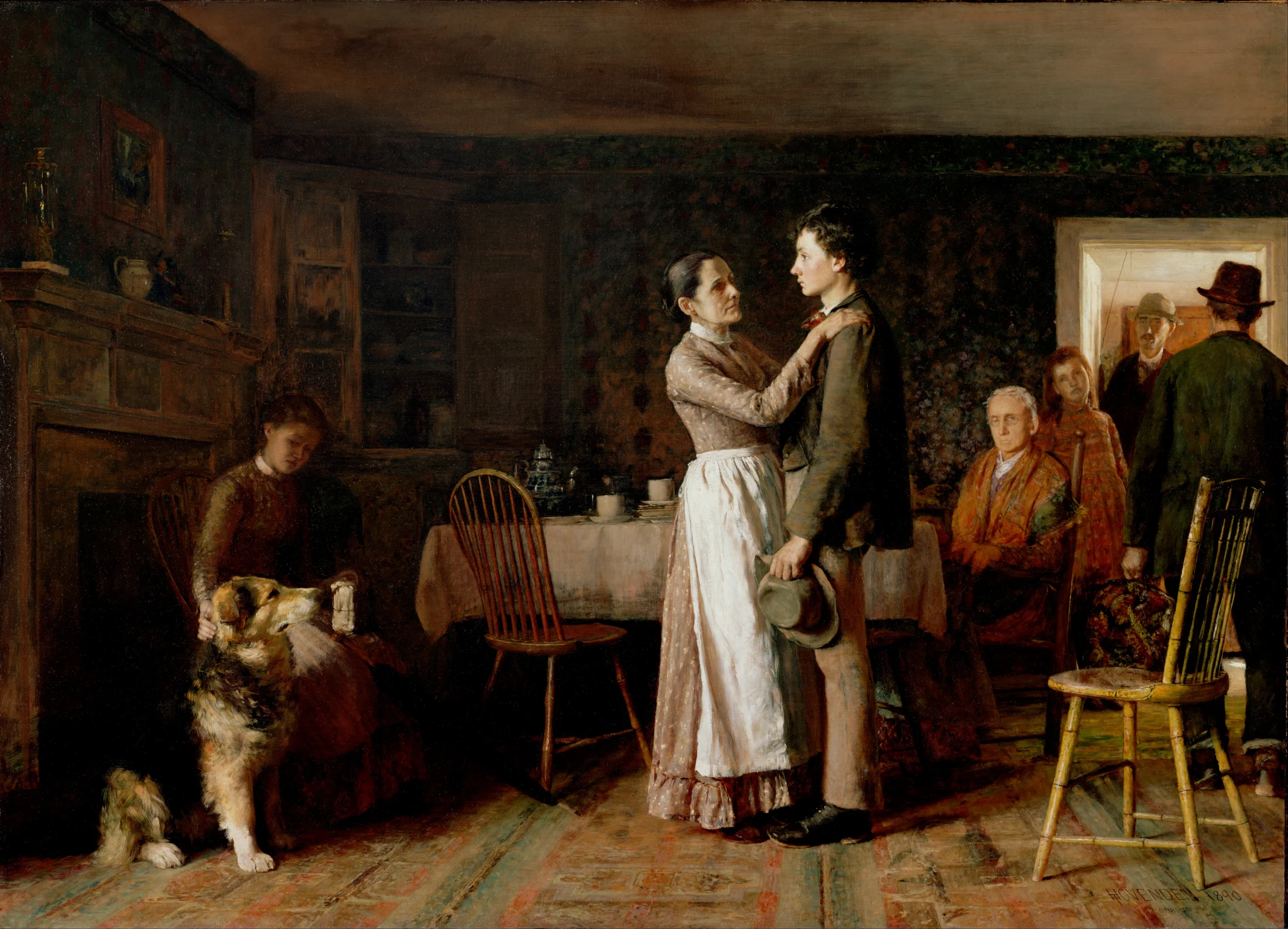
Look at this painting. There's an entire novel compressed into it, the son's ambition, the mother's grief, the father's resignation, the sister's curiosity, the dog's confusion. In a novel, you'd need chapters. In a film, you'd need scenes. Hovenden does it in one frame, because everyone's body tells their version of the story at the same time.
That's the first thing painting can do that nothing else can: show multiple truths simultaneously. Not one after another. All at once. The mother's love AND the son's excitement AND the father's acceptance, all visible in the same image, at the same instant. No other medium achieves this as naturally.
Four Things Painting Does That Nothing Else Can
1. Both sides at once
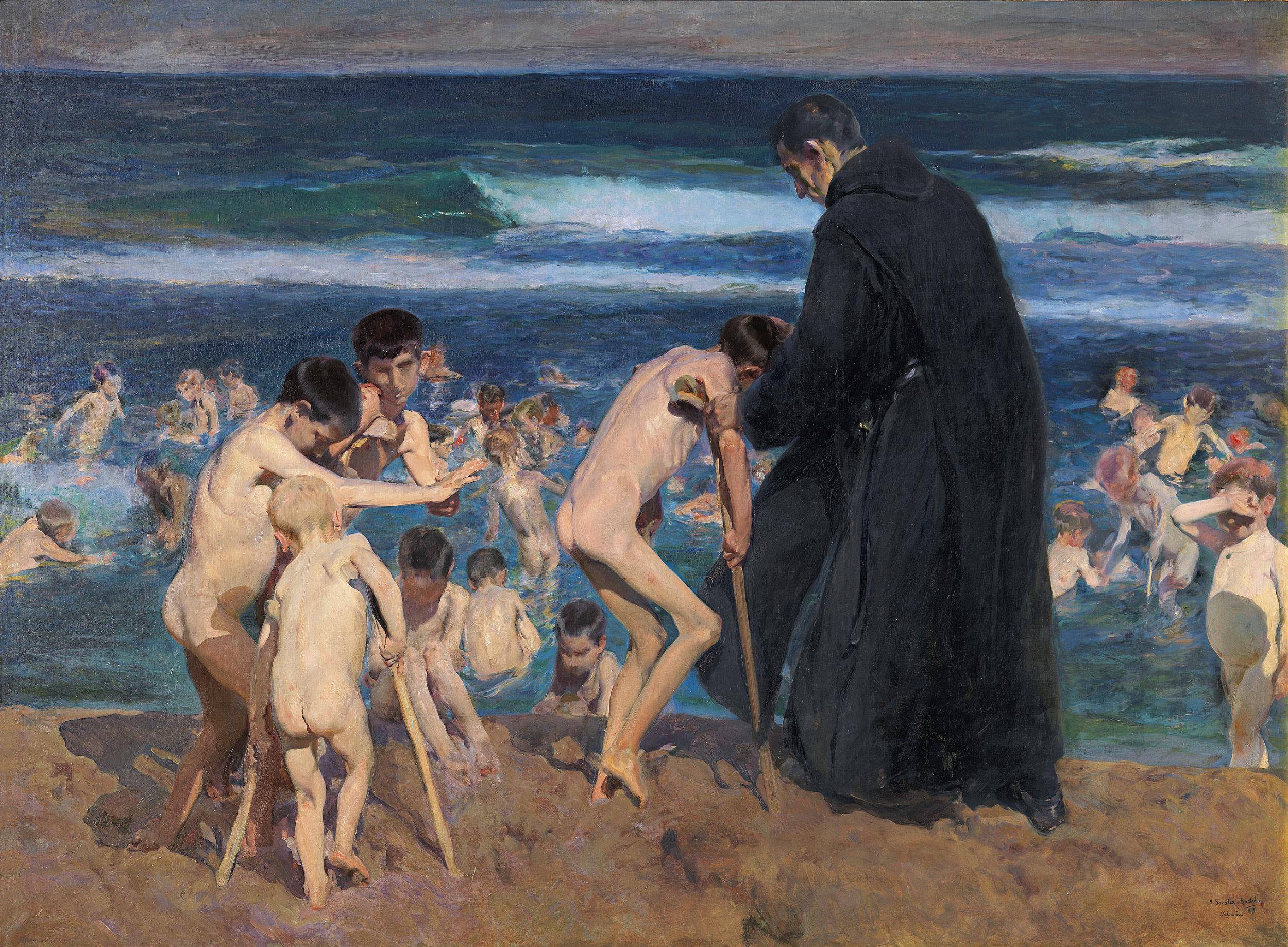
A film about a farewell shows the departure, then cuts to the person left behind. A painting shows both in the same frame, the leaving and the staying, the connection and the separation, visible simultaneously. This is why paintings can hold contradictions that would feel confusing in other media. Joy and sadness. Beauty and decay. Love and loss. Both present, neither cancelled out.
This has a practical consequence for your work: the best painting subjects contain an internal contradiction. Not a figure who is simply sad, but a figure who is sad in a beautiful place. Not a happy scene, but a happy scene with one person at the edge who isn't participating. The contradiction is what gives the painting its charge.
2. The frozen moment
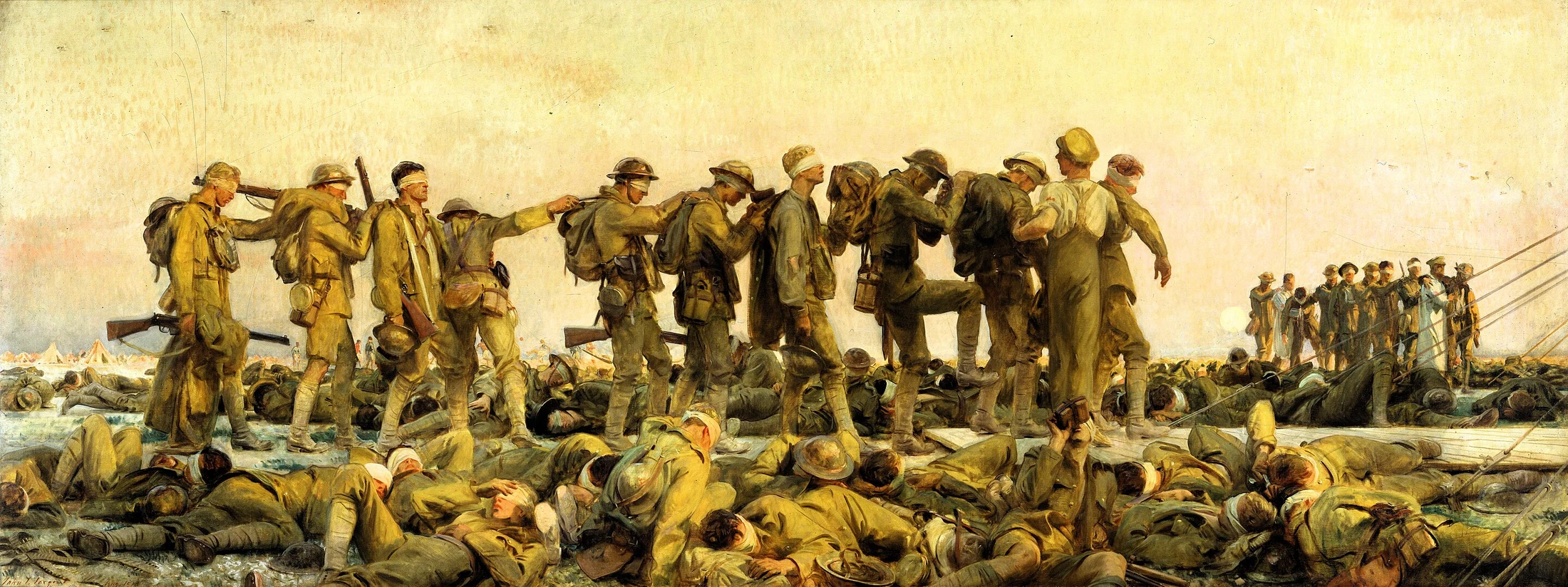
A film rushes past moments — you see each frame for 1/24th of a second. A painting HOLDS one moment indefinitely. The viewer can look at it for five seconds or fifty minutes. This changes what kinds of moments work.
Loud moments, explosions, screams, dramatic gestures, tend to feel frozen and theatrical in paintings. They work in film because the moment passes. In a painting, you're stuck with it, and it quickly feels like an actor holding a pose too long.
Quiet moments, a hand resting on an arm, a gaze through a window, the space between two people, actually get more powerful the longer you look. They reward sustained attention. The little details emerge. The subtlety deepens. These are the moments that WANT to be frozen.
The French call it the moment prégnant — the "pregnant moment." The instant that's heavy with what just happened and what's about to happen, without showing either. The viewer fills in the story from the clues. A painting that does this makes the viewer an active participant, not a passive audience.
Practically, this means: when you're choosing which instant to paint, choose the one just BEFORE or just AFTER the dramatic event, not the event itself. Not the argument, the silence after. Not the goodbye, the moment the hand releases. Not the diagnosis, the walk to the car afterward. The drama is in the implication, not the depiction.
3. The body speaks
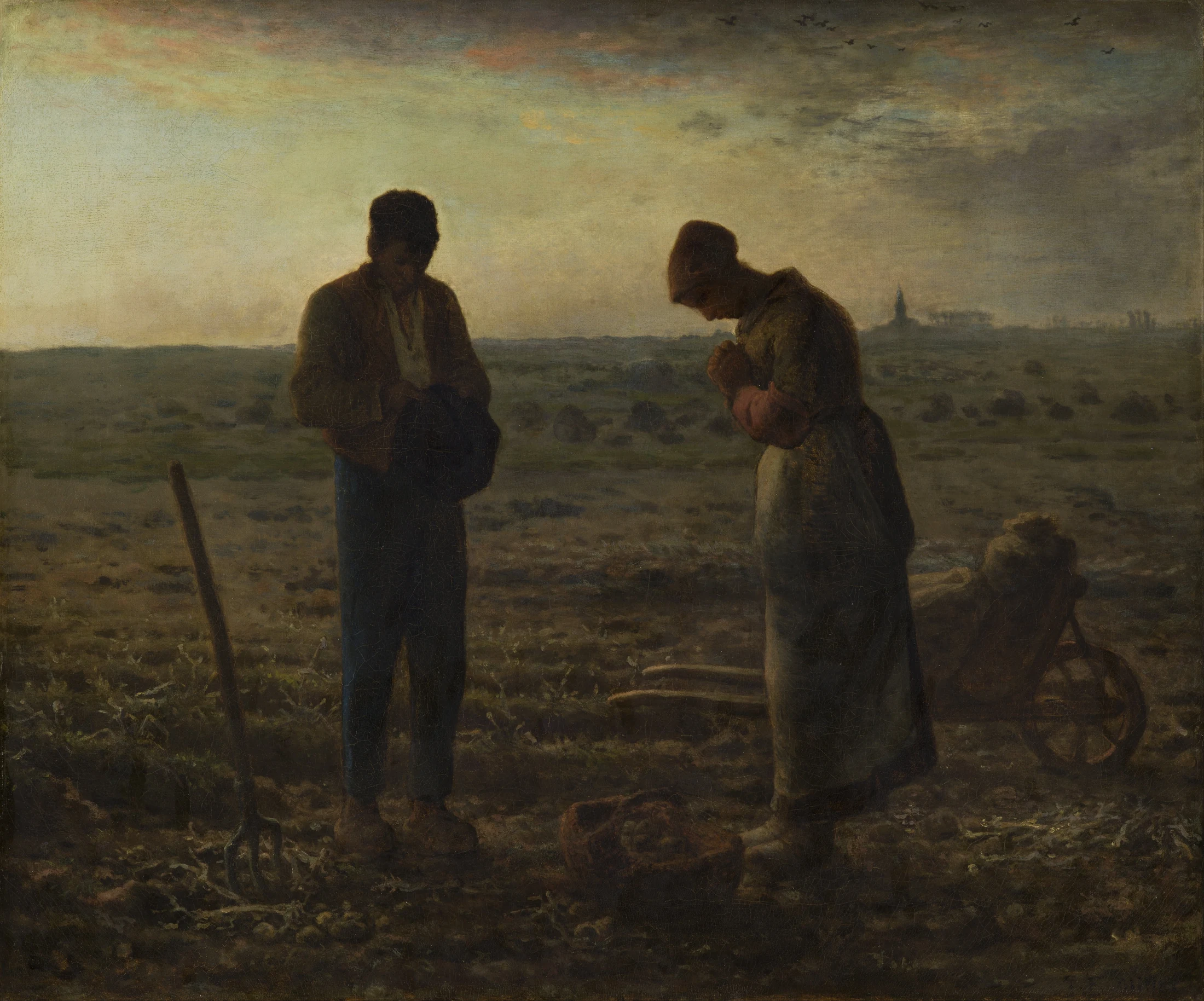
In a film, characters explain themselves through dialogue. In a novel, the narrator can tell you what someone is thinking. In a painting, the body is the only language. Gesture, posture, gaze, the distance between figures, the angle of a head, the tension in a hand.
This is both a constraint and an advantage. The constraint: you can't convey complex ideas or arguments (a painting about "the epistemological crisis" is going to be vague no matter how well you paint it). The advantage: you can convey FEELINGS that resist language, the specific mixture of pride and sadness a parent feels watching a child leave, the exact quality of loneliness in a crowded room, because the body knows these feelings before the mind has words for them.
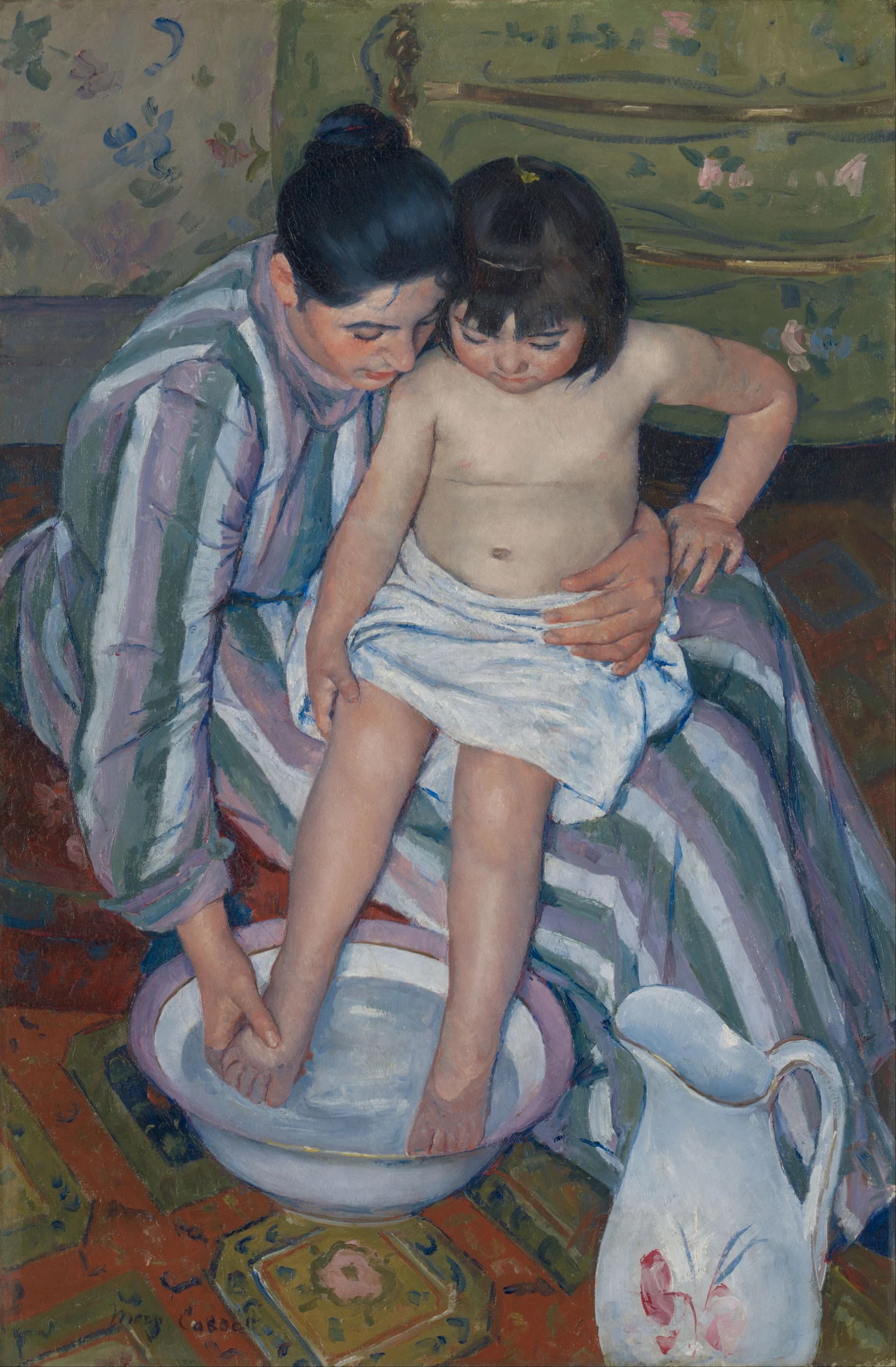
For your work, this means: before you develop a concept intellectually, ask what the BODY would look like. If you can't picture a posture or gesture that carries the emotion, the idea might not be paintable, no matter how interesting it is as a thought. A painting about "the erosion of truth" is an essay. A painting of a person holding their phone in one hand and a newspaper in the other, looking back and forth with the same confused expression, is a painting.
4. Light declares what matters
In daily life, light is practical — it illuminates so you can see. In film, light is mostly functional, it needs to be bright enough to read the actors' faces. In painting, light is EDITORIAL. You control exactly what the light touches and what it doesn't. What you illuminate is what you declare important. What you leave in shadow is what's hidden, denied, feared, or unknown.
This gives painters a storytelling tool that no other medium has in the same way. A face half in light and half in shadow tells a story about inner conflict. A figure in a dark room with one shaft of light on their hands tells a story about what matters versus what surrounds. A couple where one is in warm light and the other in cool shadow tells a story about emotional distance even if they're touching.
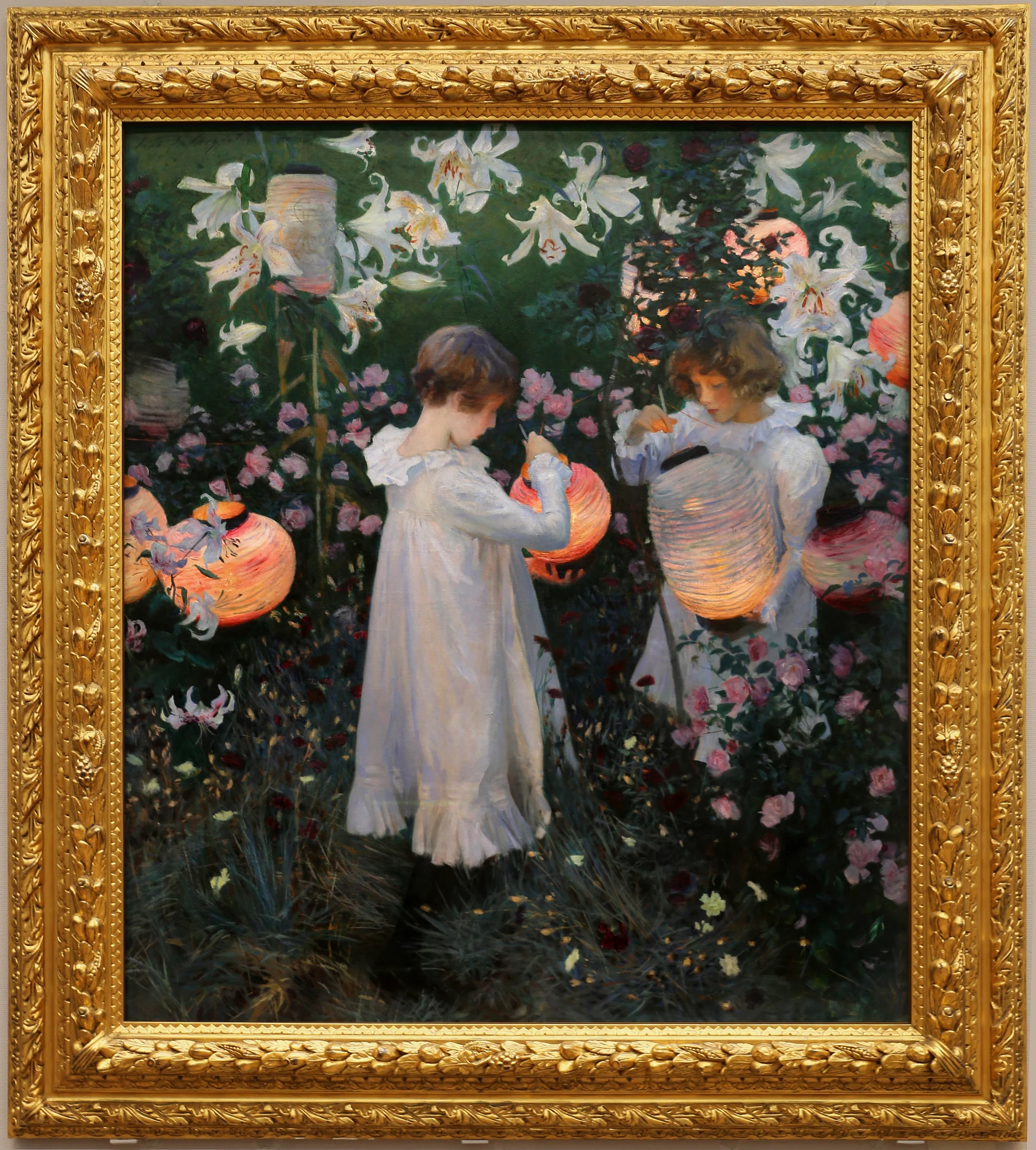
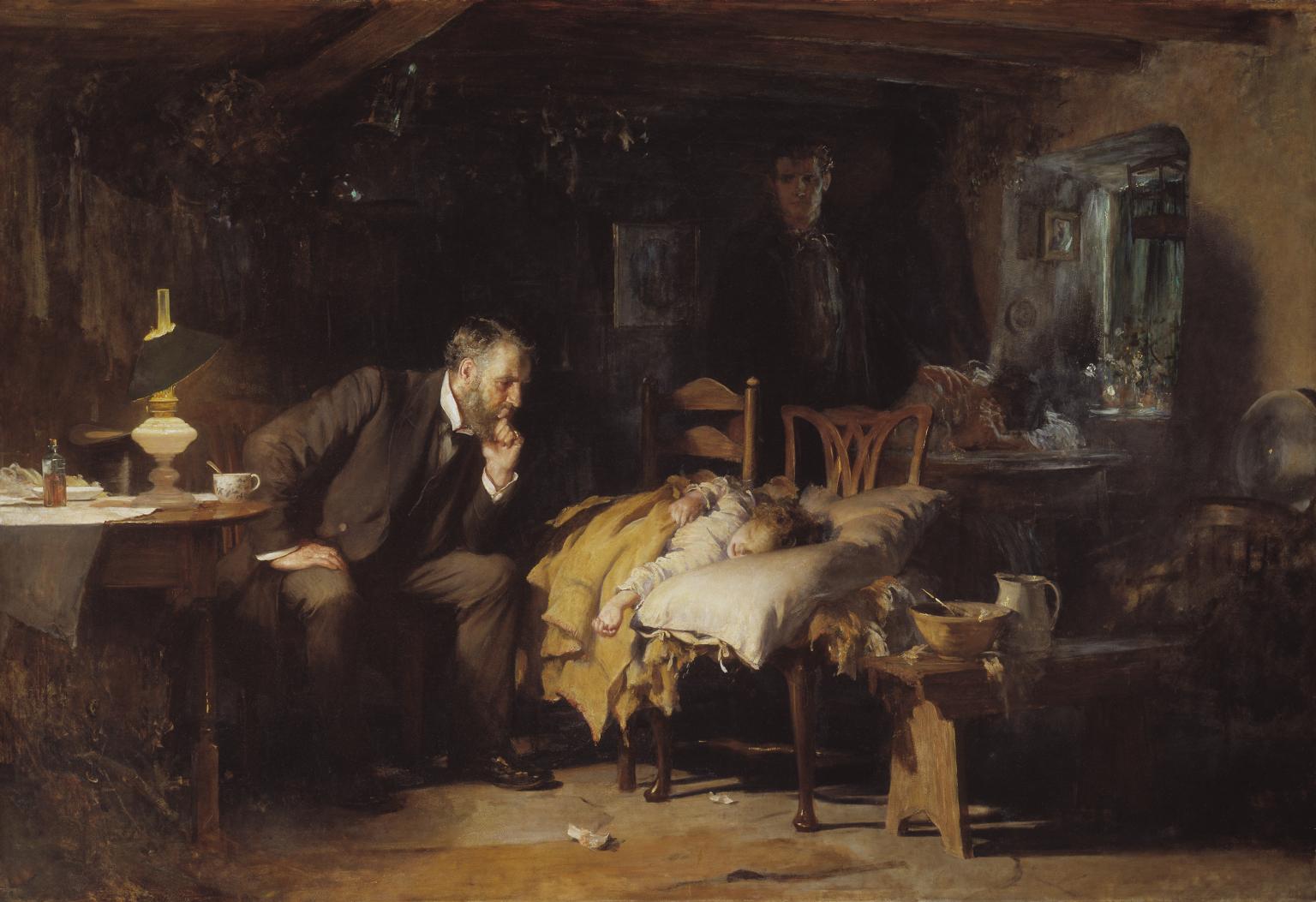
Practically: your lighting decision is your first narrative decision. Before composition, before color, before detail, decide where the light falls. That choice will tell half your story before you've painted a single figure.